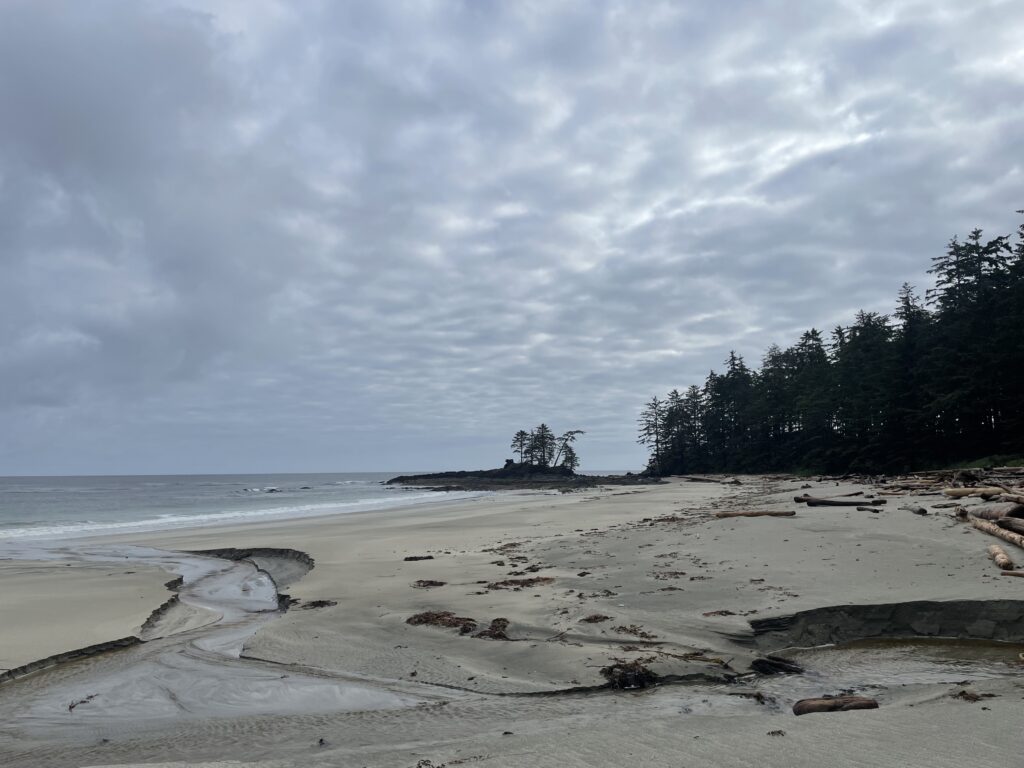
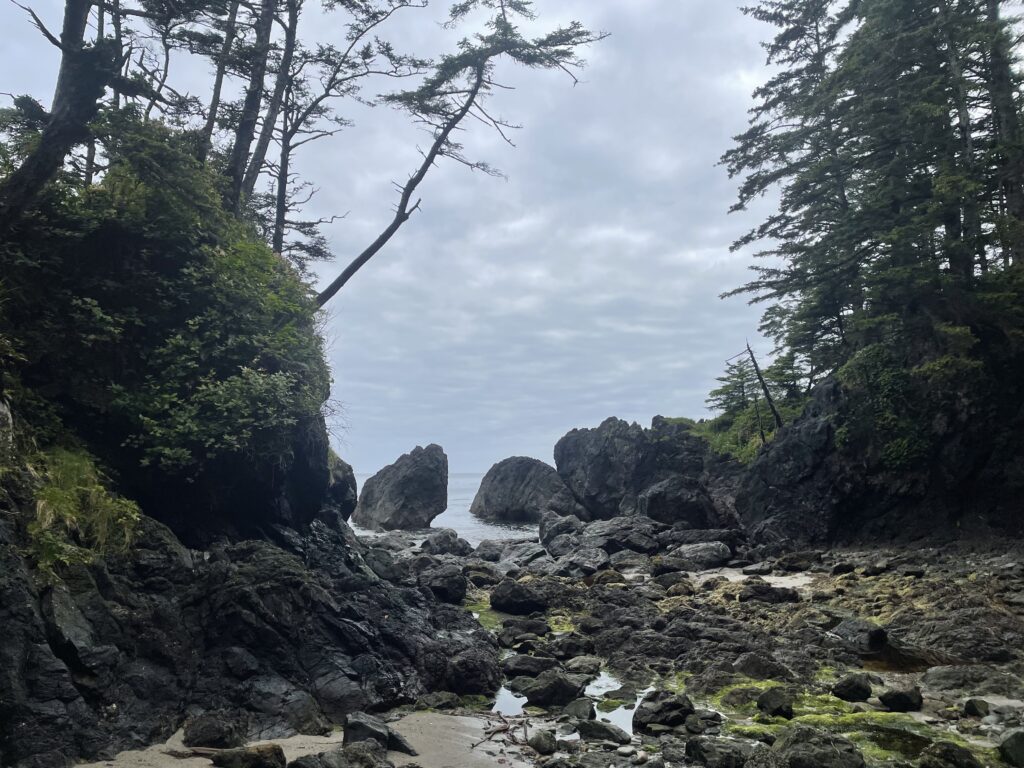
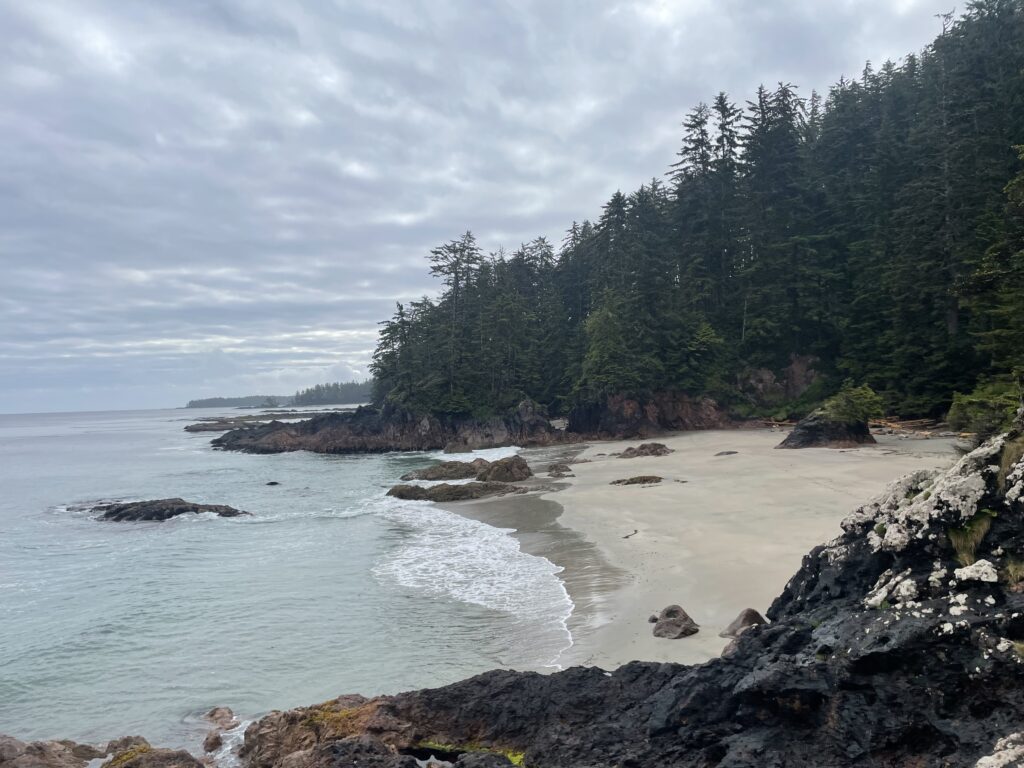
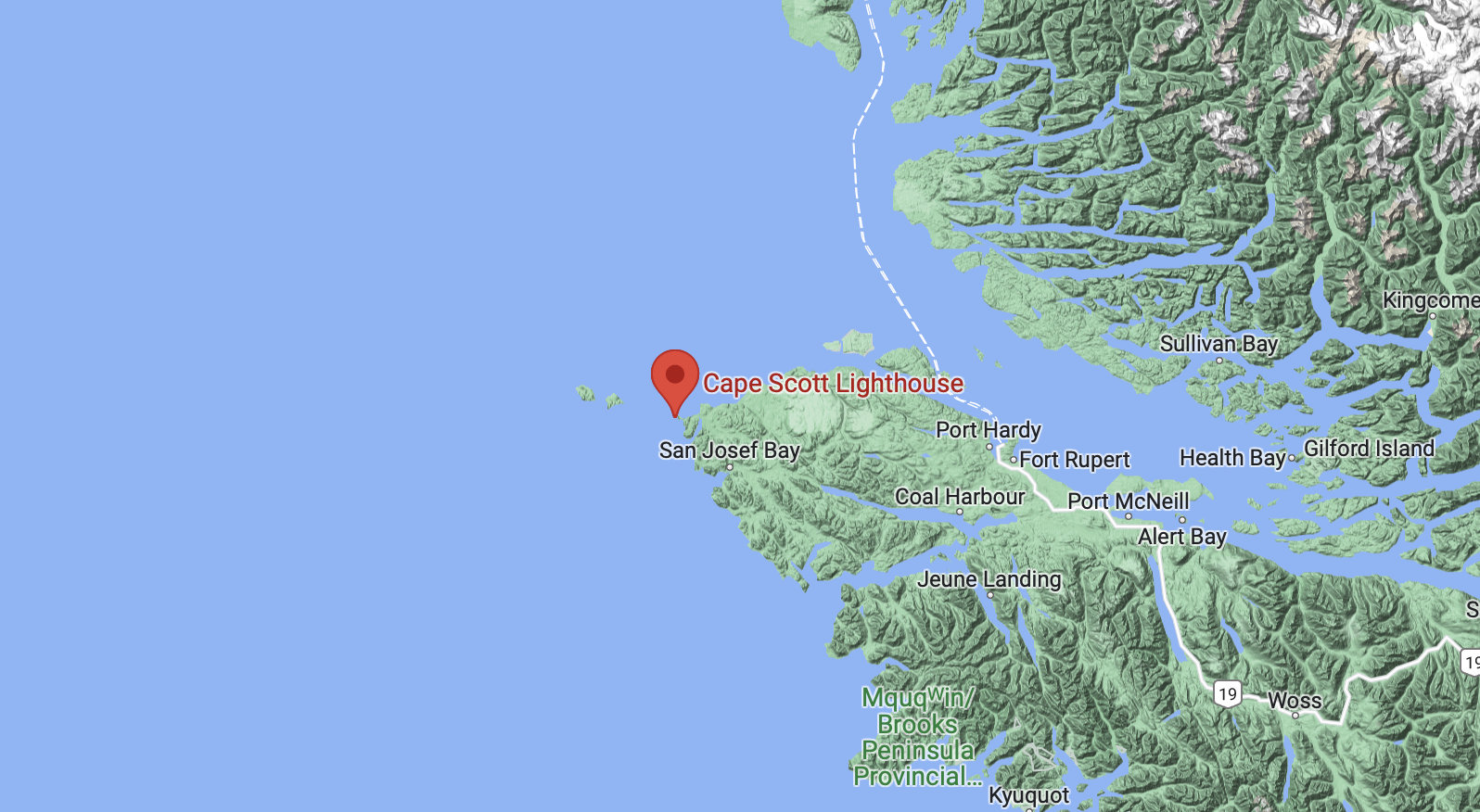
Cape Scott, a last minute additional to the road trip itinerary after regular mentions from locals. It’s a solid 2 hour drive down pothole ridden logging roads. Luckily I tailgated a truck that seem to have intel on when the huge logging vehicles were about to pass, and they needed access to the whole road they were that big. After leaving my guardian logging road angel, I stopped at Holberg, a tiny hamlet at the tip of the estuary heading in from the west of the island. A quick water fill up thanks to some friendly locals, I completed the journey to the start of Cape Scott Provincial Park.
I stayed at a “campsite” run by a local called Doug, who looked a bit like Santa. On arrival you’d think you’d jus driven into a junk yard, with old run down rusty cars, a building in a pile of timber and overgrown camp “pitches”. Resisting the temptation to drive straight back out, Doug approached the car from his small cabin and we got talking, a really interesting man with an interesting story. After satisfied the place was legit, I chose this place as my base for the night, for a reasonable $10, I parked up on a patch of overgrown grass, next to a rusty fire pit. Doug, it turns out, now 75, has lived in the area for most of his life, actively protesting against the logging industry, and the destruction that they doing to the old growth ecosystems on the island. With only 4% of original old growth trees left on the island due to logging it was easy to feel his passion for protecting the trees in the area. Thanks to Doug’s fight with logging companies and meetings with the government, logging companies now have to leave a perimeter between lakes, rivers and their logging boundaries. A start at least it what seems a long uphill battle in a historic, lucrative but in reality a destructive industry. After sharing stories with Doug, in turns out the house in a pile of timber on the land was his home until a huge storm in 2020 tore it down. A sad sight, but one Doug remained optimistic about the re-use of the quality timber that once was his home.
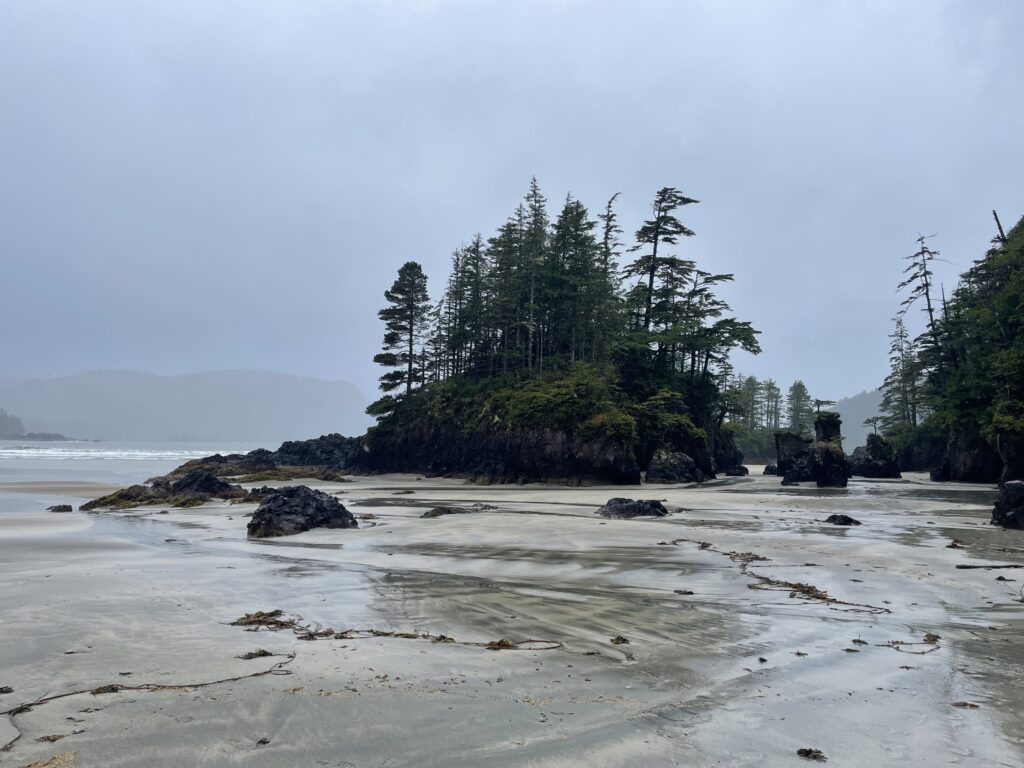
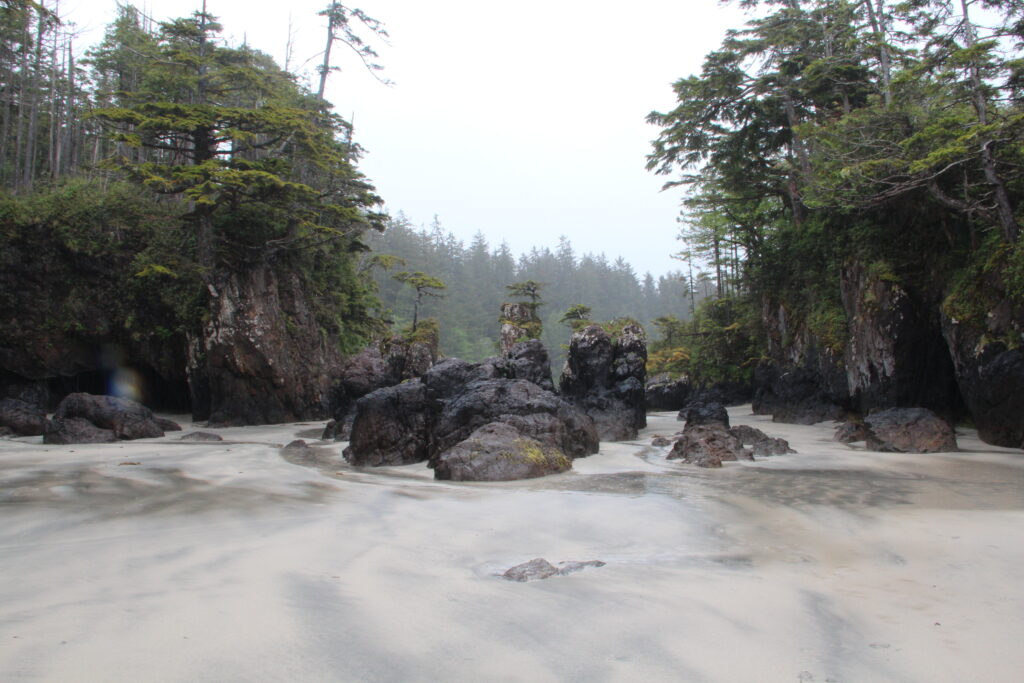
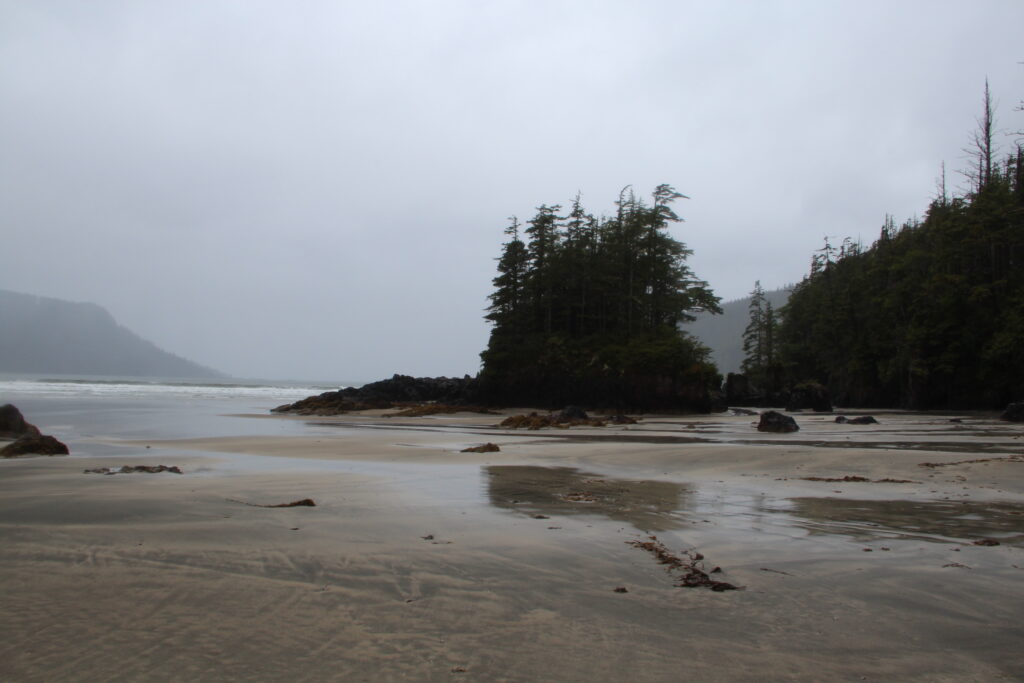
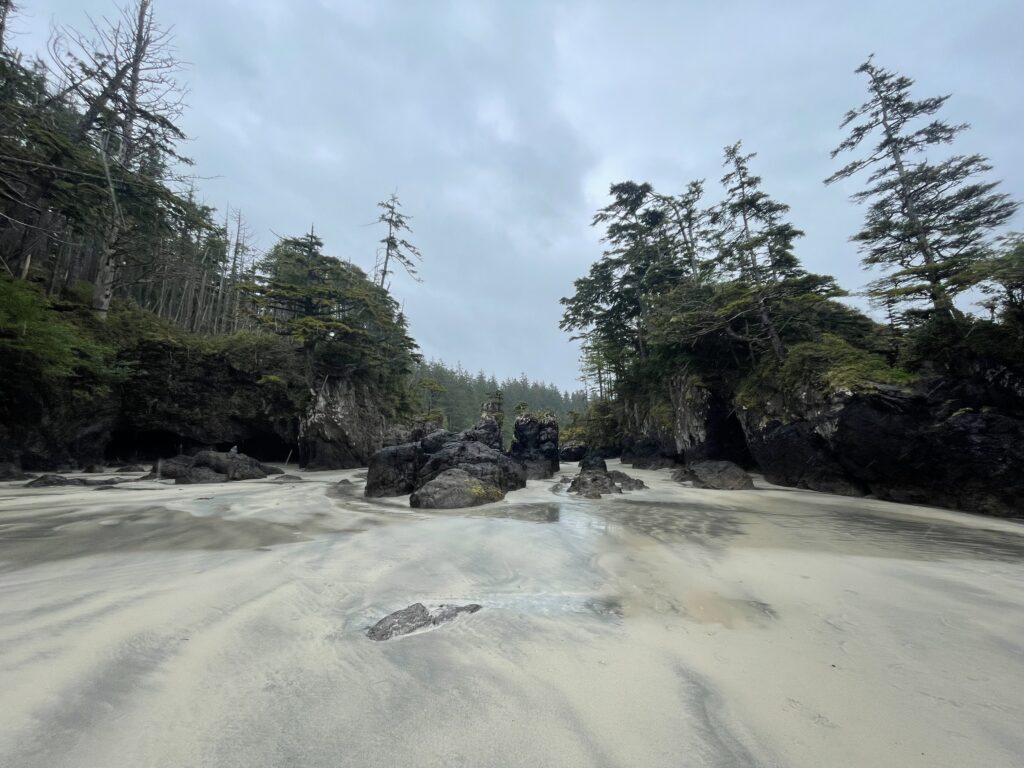
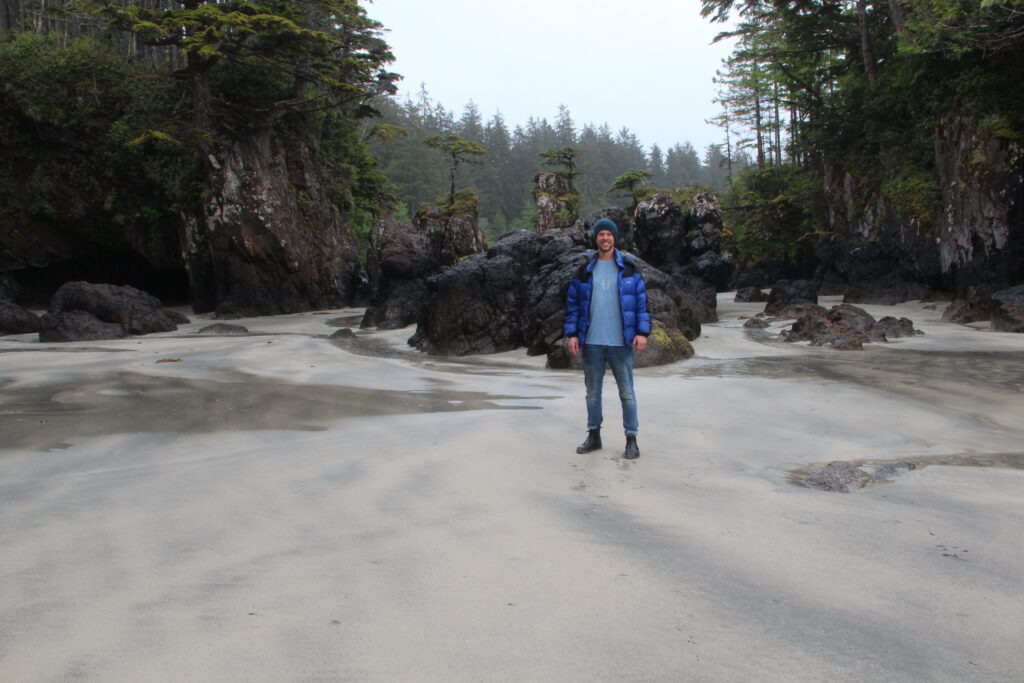
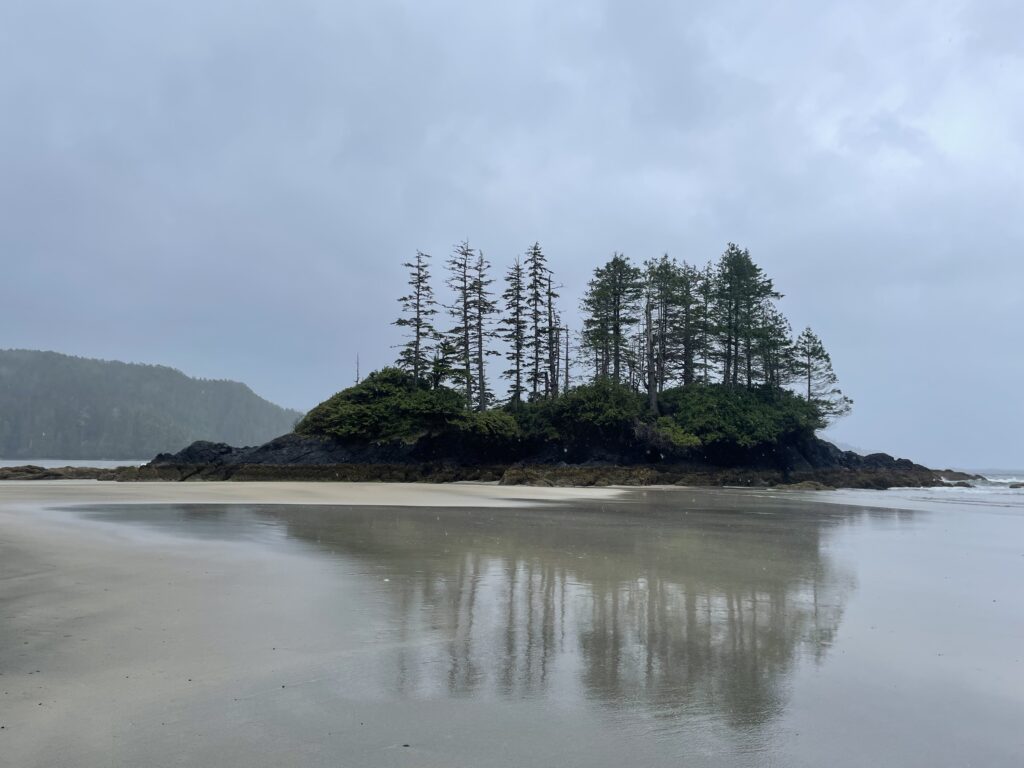
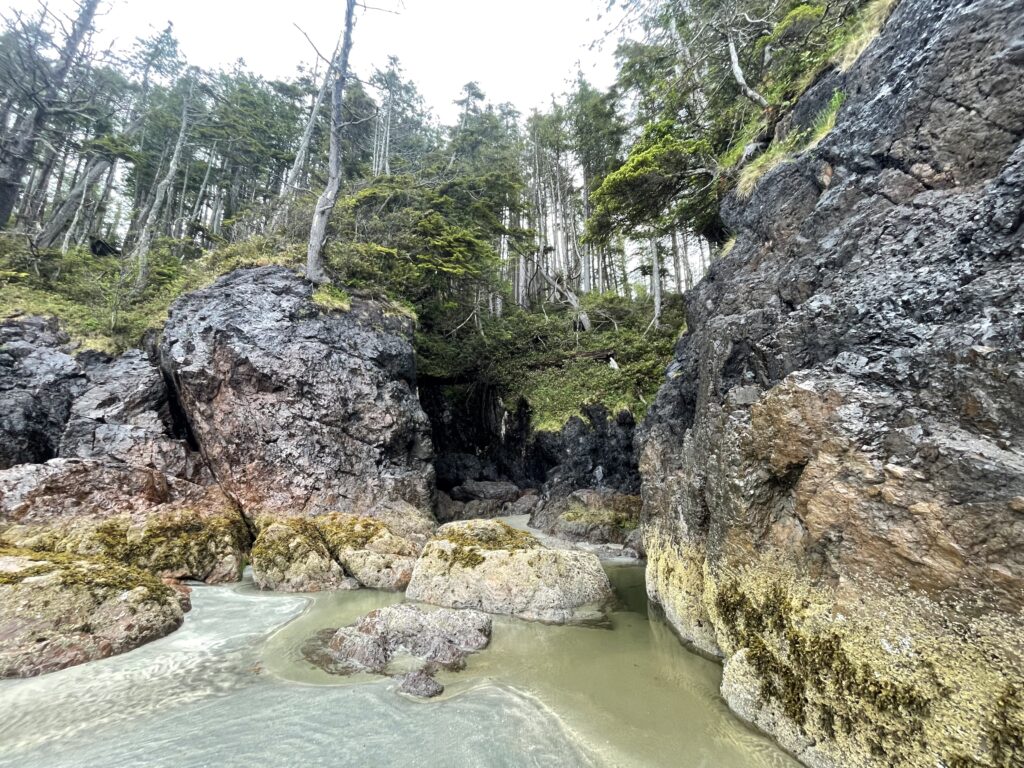
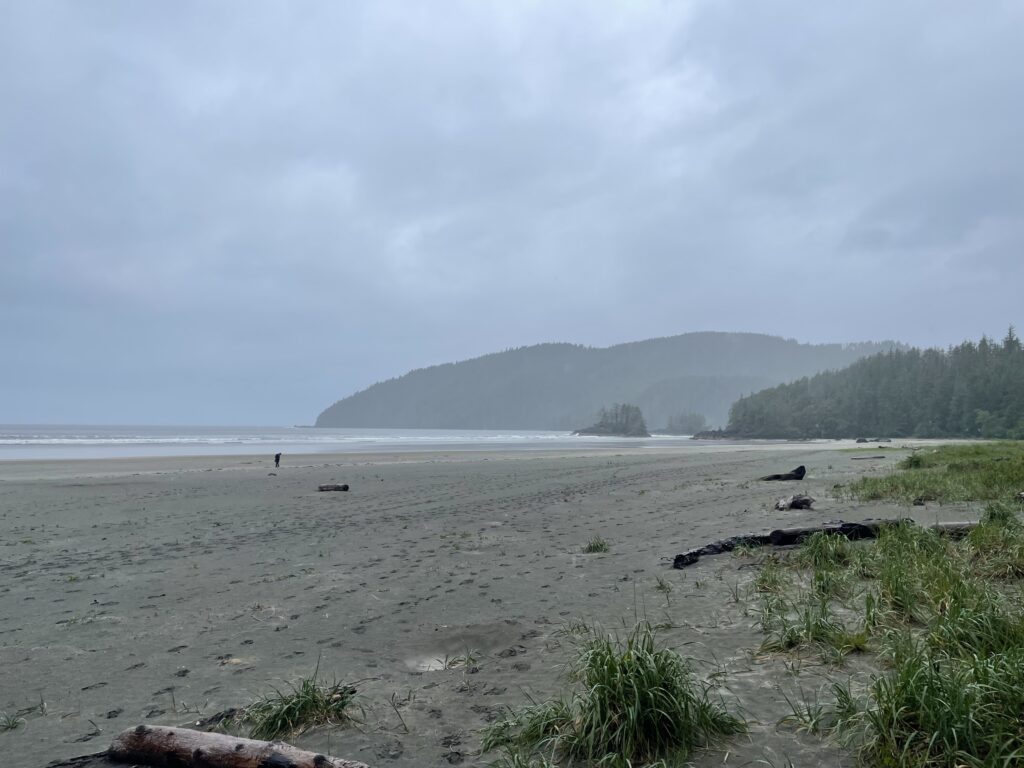
The first stop in the Cape Scott Provincial Park was San Josef Bay, a beautiful coastline, made even more dramatic by the torrential rain (at least that’s what I kept telling myself while trying to stay at least somewhat dry). The beach is stunning, full of interesting features such as sea stacks, caves and small islands. This alone, would have made 2 hour trip down logging roads from Port Hardy worthwhile.
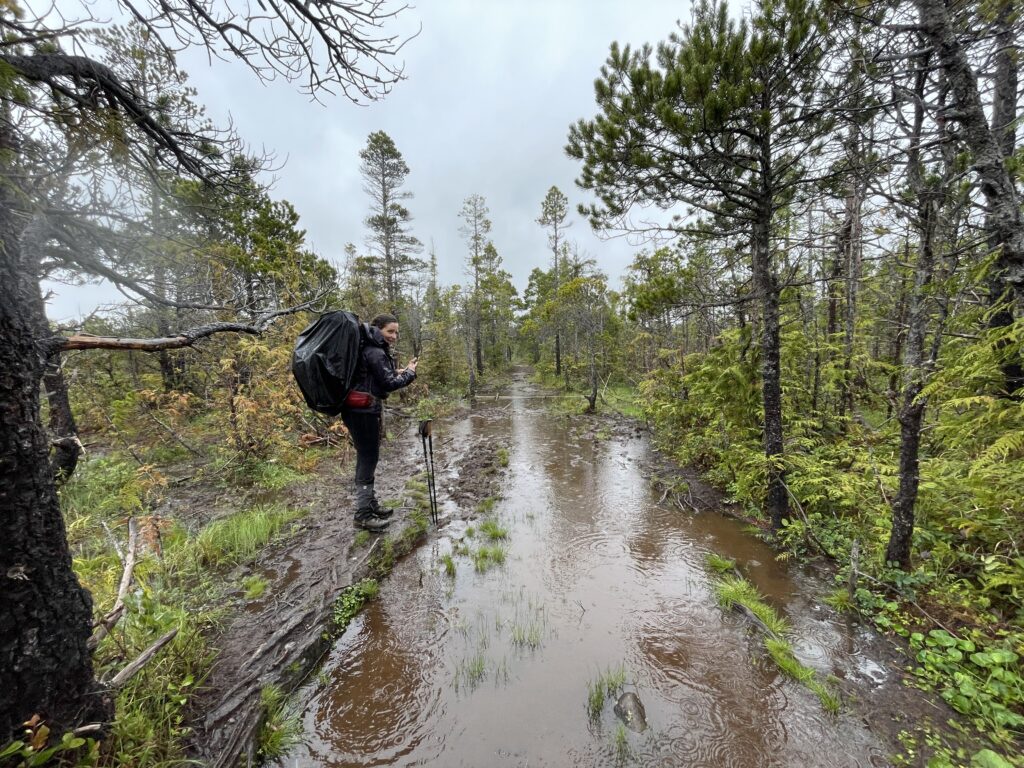
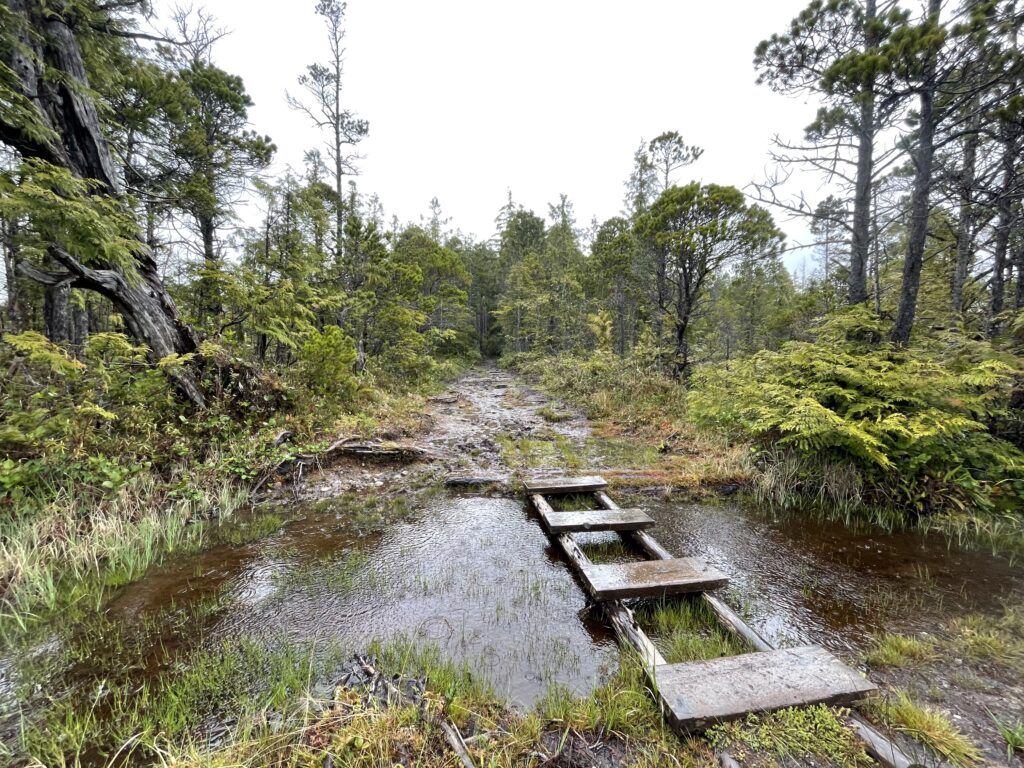
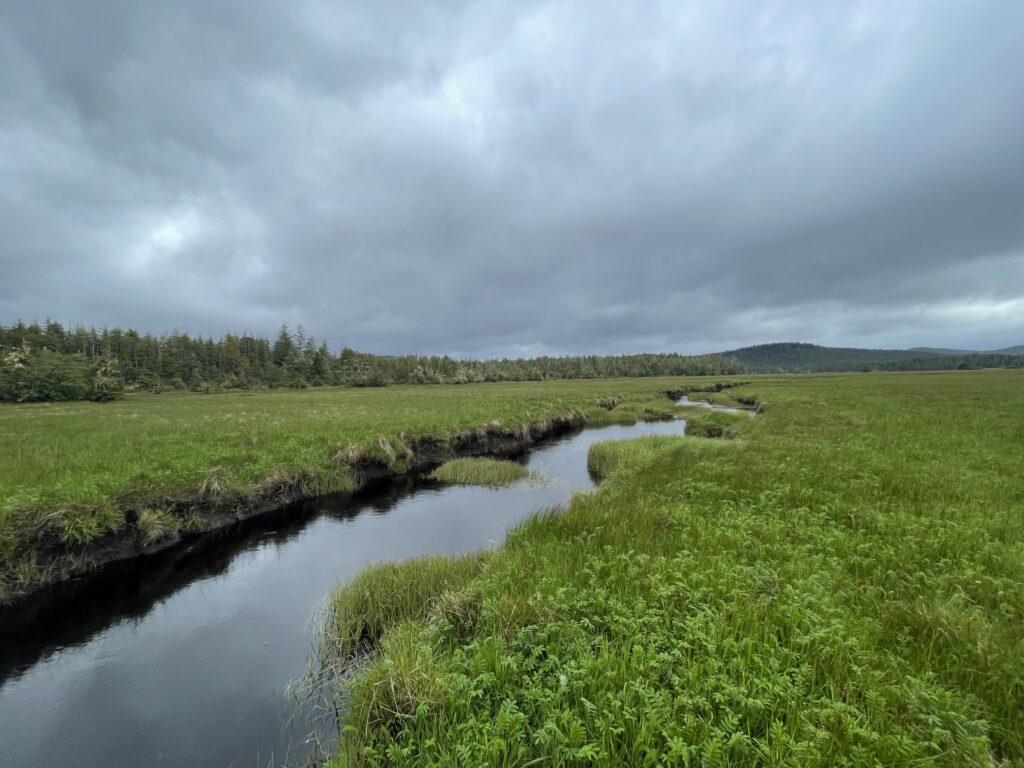
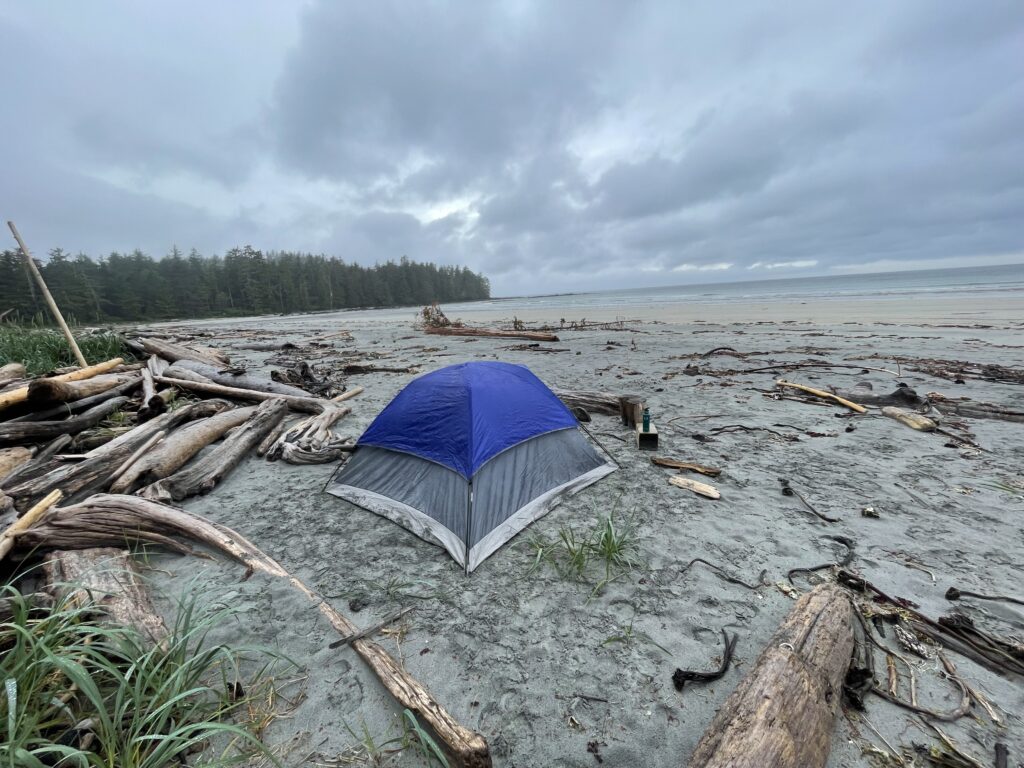
Stage 2 of the trip, another unscheduled and slightly mad decision to do a 2 day trek to the north western point of the island, Cape Scott Lighthouse. No easy feat given the wet conditions and basic equipment I had at my disposal. After witnessing a number of people heading off on the Cape Scott trail, it was a must do, despite the poor weather warnings. When a German couple passed me covered in a hazmat suit equivalent of hiking gear, waders and heavy duty waterproofs, I did question whether I had made the right call. Thankfully, especially because I was travelling solo, I met a friendly Canadian woman who become my hiking companion for the next 30 hours. Trekking through swamps we navigated the difficult terrain relatively unscathed, we came out of the Cape Scott peninsula to Nels Beach, a stunning coastline. This was our base for the night. 16km in the legs were tired but the mood was high.
With the rain setting in it was a very difficult night, I subsequently made the decision to hike Cape Scott Lighthouse and back to the trail car park in one day. On the high of making it to the lighthouse, it was a tough and long solo hike back to the car, along some very muddy trails (swamps…).
Definitely Type 2 fun, but worth the pain for the views and beach camping experience.
Be First to Comment